 In this interview for BOMARKA, American philatelist Ingert Kuzych speaks with Ukrainian journalist Oksana Lukashuk about the power of postage stamps to tell Ukraine’s story to the world. Kuzych, an agronomist by profession and a philatelist by vocation, reflects on his lifelong passion for Ukrainian history and philately, from childhood stories told by his Ukrainian father to decades of collecting, research, and writing. The conversation traces his role as initiator and sponsor of the Heorhii Narbut Award, which helped raise the artistic standard of Ukrainian stamp design, and explores the significance of Western Ukrainian issues, wartime stamps, and diaspora philately.
Mr. Ingert, what connects you with Ukraine?
Ukraine is literally in my blood and in my psyche. By heritage I am only half Ukrainian since my mother was Austrian. (My parents met after World War II when my displaced-person father found himself working on an Austrian farm owned by a man who would become my grandfather (my mother’s father)). My historian father was a master story teller and growing up he would regale my sister and myself every evening with a new story. We loved these sessions and I was constantly amazed at all the wonderful tales he came up with. Anyway, the yarns usually involved a fearless and intrepid Cossack or prince who had to overcome all sorts of obstacles to win a fair maiden. I thus became deeply (and somewhat romantically) imbued with Ukrainian history. As I grew older, I made it a point to learn more about Ukraine. But it was not always easy since Ukraine was then not a recognized country. But it HAD been a country and I saw it as important to let others know that. So I set out to collect lots of things connected with Ukraine, especially books, folk art (particularly pysanky), and stamps.
You are an agronomist by profession, but you are passionate about philately. When did you become interested in this hobby?
My interest began as a youngster, probably around age 10. Here again my father was involved. He too had collected when he was young but then had to give it up when he suddenly became the breadwinner for the family (his mother and two younger brothers). He helped me obtain stamps from around the world but in general encouraged the collecting of European countries.
Please tell us about your stamp collection.
As one pursues philately over a longer period of time, one typically begins to realize you can’t collect everything; you have to start focusing on what interests you most. What are the countries you truly want to collect? Are there particular topics/thematics that are of great interest? For a long time I focused on collecting the United States, Canada, Ukraine, Austria, and the Vatican. But in 1985 I joined the Ukrainian Philatelic and Numismatic Society (UPNS) and it was then that I began to seriously focus on Ukraine. So, gradually, I disposed of my Vatican holdings, then Canada, and finally US, to only retain the stamps from my two ancestral countries.
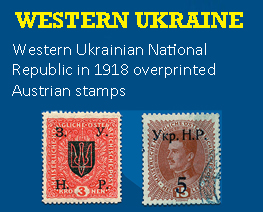
Most people do not realize it, but Ukrainian philately includes many collecting areas: the stamps of the so-called classic period (1918-23), zemstvo stamps, Western Ukraine (1918-19), Carpatho-Ukraine (1939-45), Soviet Ukraine, Taborova Poshta, Pidpilna Poshta, Government-in-Exile issues, diaspora issues, modern Ukrainian issues, postal stationery, picture post cards (see below), Ukrainian topics on foreign stamps, etc. So, here too I began to specialize further and I gravitated mostly toward Western Ukraine since it overlaps both Ukrainian and Austrian philately. (Almost all Western Ukraine stamps were created by overprinting remnant Austrian stamps.)
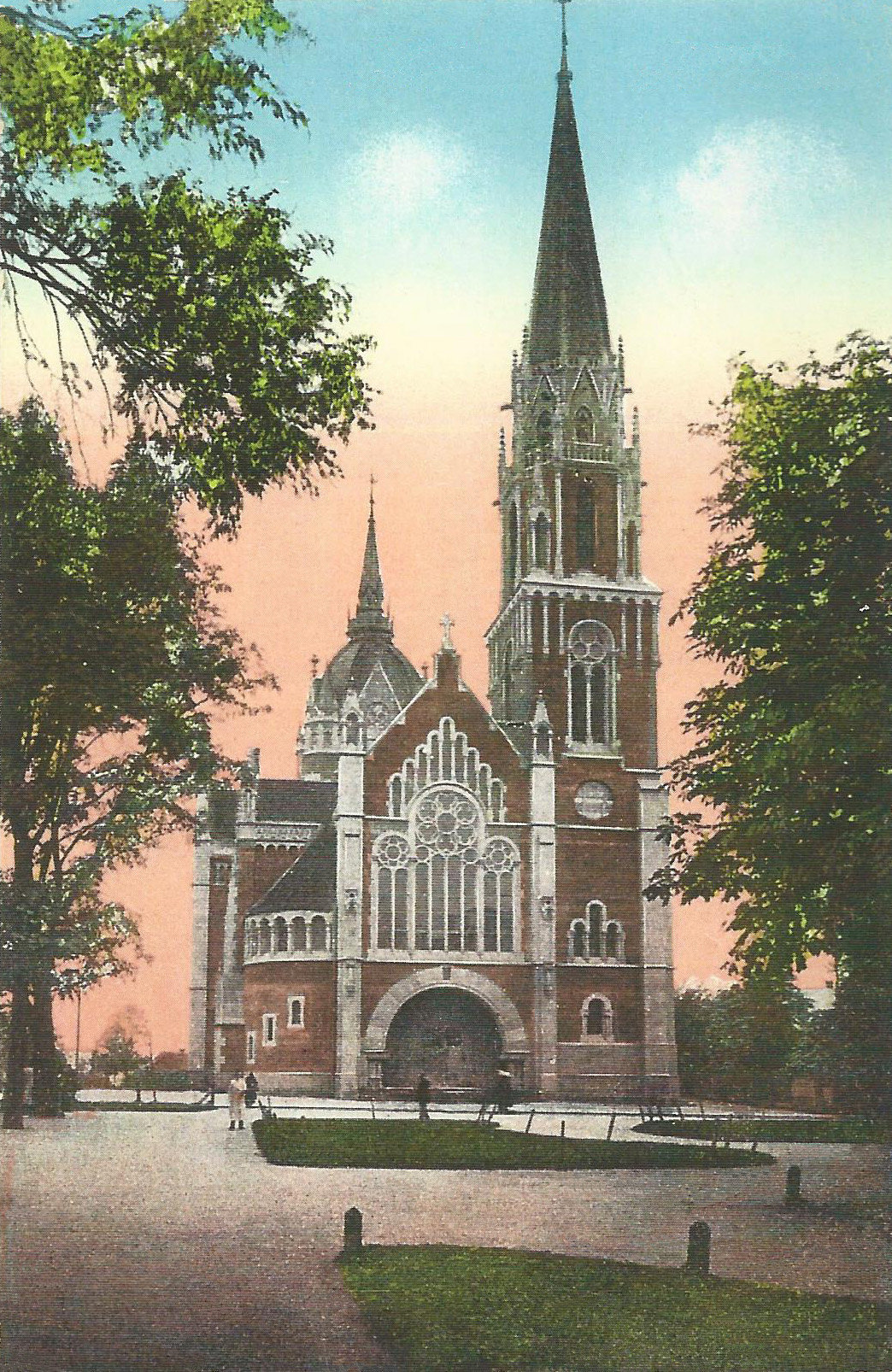
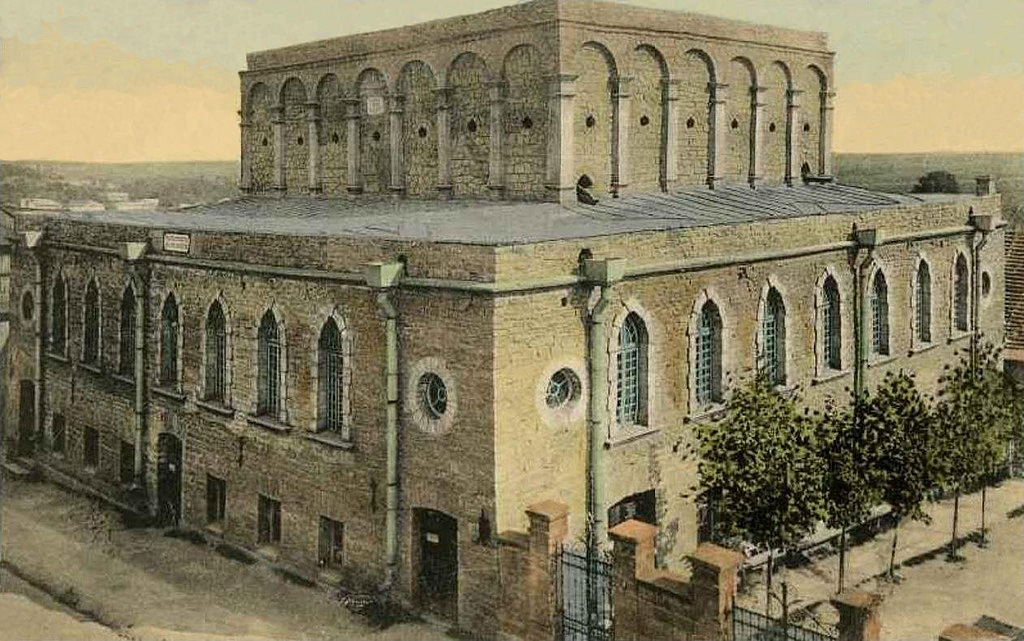
Figures 1 and 2. Although not always appreciated as a part of philately, postcards can wonderfully enhance a philatelic collection and additionally serve as historical mementos. For example, two former outstanding architectural gems from Ternopil, the Our Lady of Perpetual Help Gothic church with its soaring steeple and the centuries-old fortress synagogue, today no longer exist.
In the late 1990s and early 2000s, I became acquainted with several UPNS members who collected Western Ukraine and they got me thoroughly hooked into that specialty area. Even so, I still collect other Ukraine-related areas.
I also enjoy two other collecting fields: Hawaii and flags on stamps. The former includes not only Hawaiian stamps (issued between 1851 and 1899 before Hawaii became a US territory) but also Hawaiian topics on stamps of other countries. The interest in Hawaii developed as a result of my wife and I visiting those beautiful islands on multiple occasions in the past.
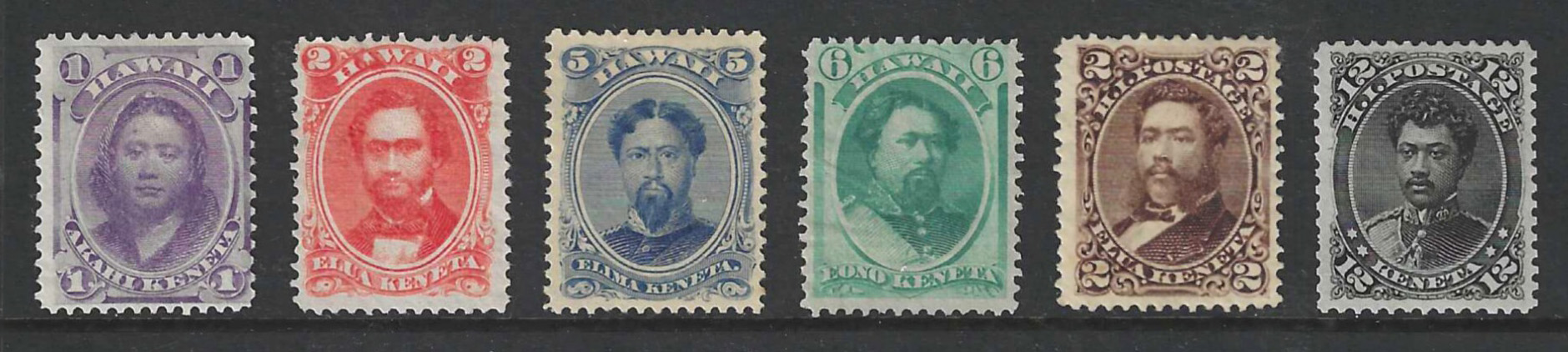
Figure 3. Some Hawaii stamps from the late 19th century.
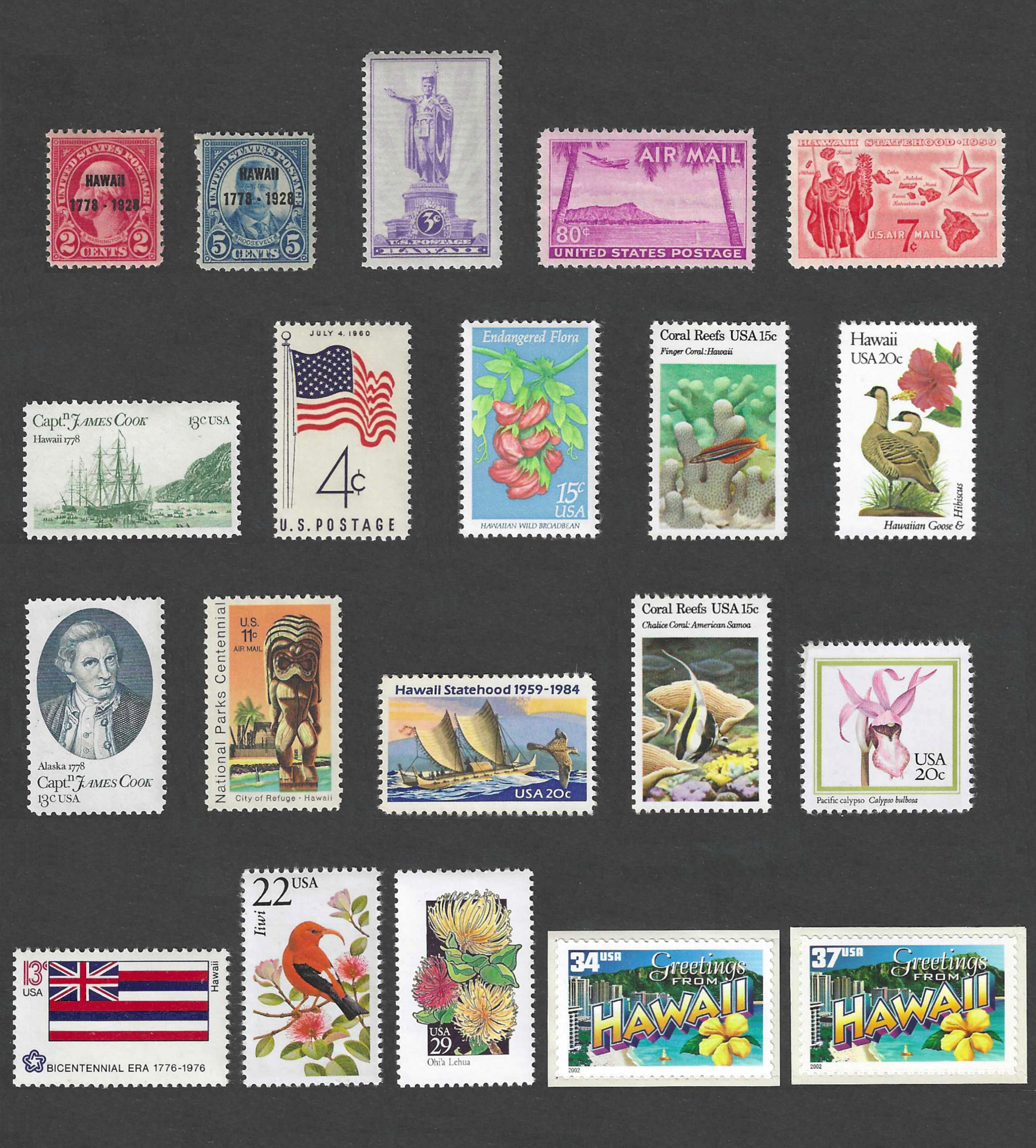
Figure 4. A sampling of US stamps featuring Hawaii-related topics.
I have always had an intense interest in the flags of countries and how they have changed over time. Because there are so many stamps that show flags in a variety of settings, I only collect stamps that depict a single national flag flying unfurled (not shown in some background setting or hanging limp on a flagpole).
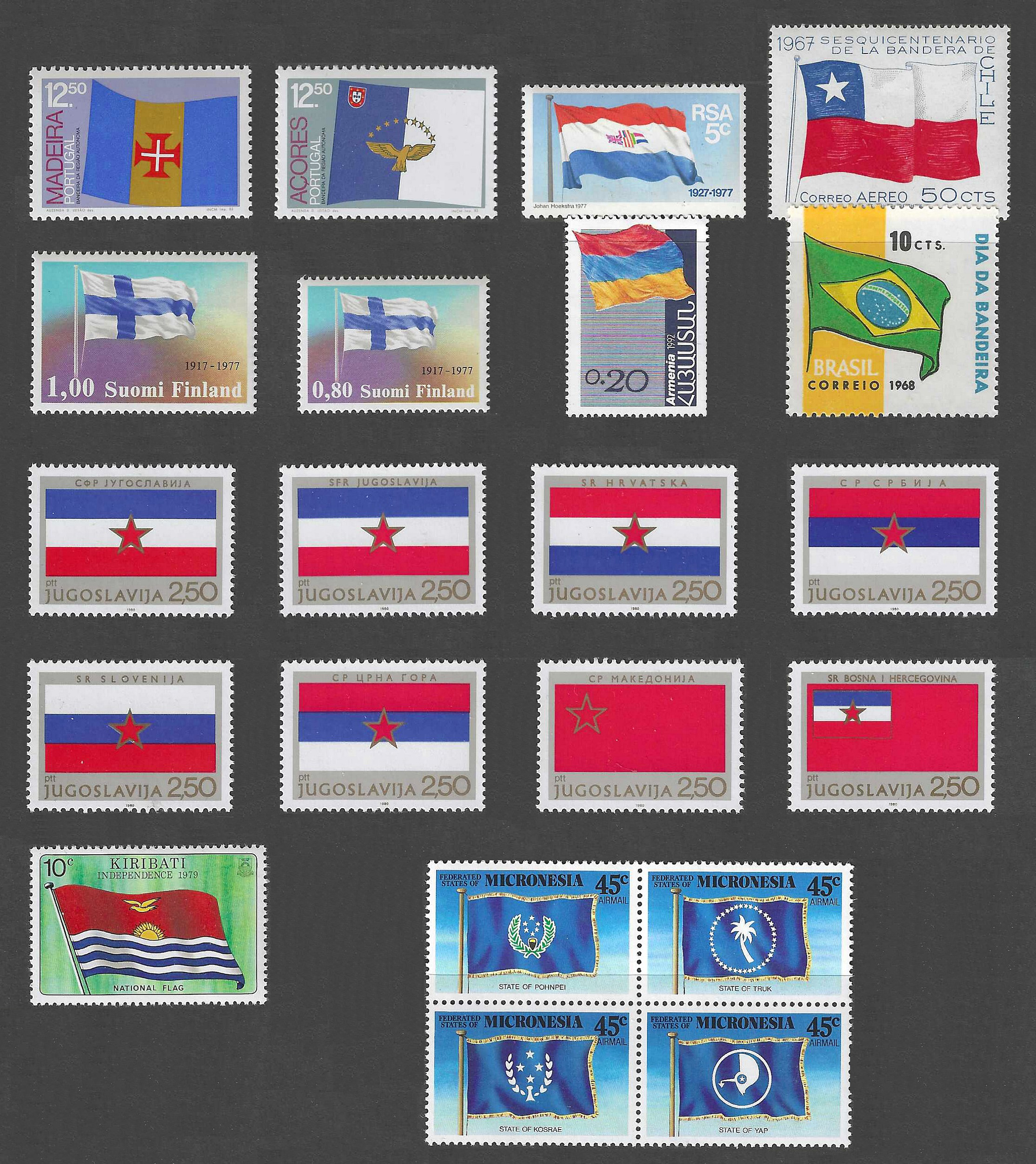
Figure 5. A small selection of flag stamps from around the world.
How did you go from being a simple collector to a researcher of stamp history? What exactly motivated you to do this?
I am somewhat of a polymath with an intense curiosity on a wide range of subjects. So, I have amassed a large library on a wide variety of topics. As one might expect being the son of a historian, the bulk of my holdings are of history books, but they also include volumes on everything from Egyptian hieroglyphics and Maya glyphs, to astronomy, to fine art, languages, geography, biology, sports history, and, of course, postal history and agronomy.
So, when collecting stamps, I wanted to know what was being depicted and why, and I would try to find the answer in the Encyclopedia Britannica (the best one-stop reference available before the internet and one of the best investments my father ever made).
Here is an example of how stamps helped me learn. Few people know it but the personal physician of Ethiopian Emperor Haile Selassie (ruled 1930-1974) was a Ukrainian (whose name I no longer remember). My father kept up a correspondence with this person for many years and would give me the colorful Ethiopian stamps off of the envelopes. One stamp in particular commemorated the Battle of Adwa (1896) and after a bit of research I learned that it was in that encounter that the Ethiopians were able to decisively defeat the Italians and maintain their independence – becoming one of the few African nations never colonized. I have retained an interest in Ethiopia and its unique history ever since!
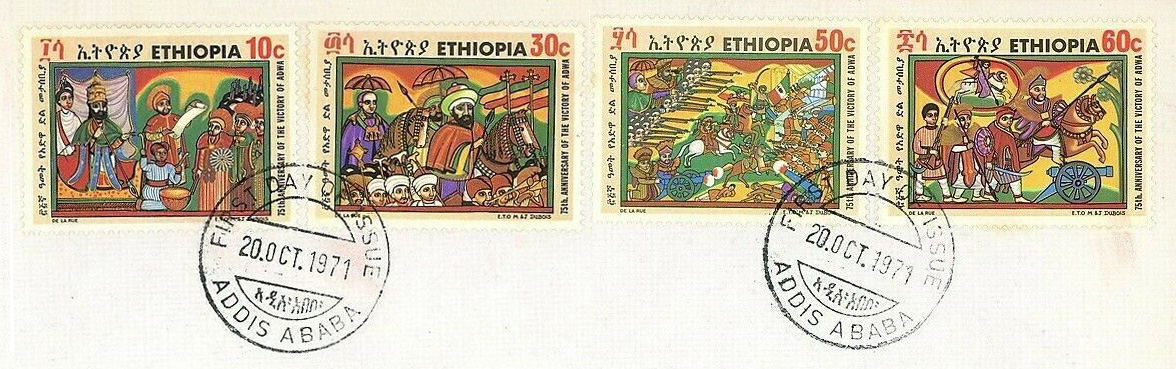
Figure 6. The 1971 Ethiopian stamp set commemorating the 75th anniversary of the Battle of Adwa. It was a stamp from this set that sparked my interest in this East African country and its long history dating back to pre-Biblical times.
The same holds true with the stamps of Ukraine – it is important to learn the story behind their issuance and that is what I have endeavored to do.
How did you feel back in 1991 when you learned that Ukraine had gained its independence?
I was extremely fortunate to be visiting family in Ukraine (for the first time) precisely during the summer of 1991! In the weeks prior to 24 August, it was amazing to already see the blue and yellow flag flying in so many locales (particularly throughout western Ukraine). But when the 19 August coup took place in Moscow, there was a noticeable pall in the air as no one knew what would happen next. On the 24th, a number of friends took me on a day-long sightseeing trip into the Carpathians and we did not get back till the evening. The first thing we heard when we got out of the car was: “Ukraine is independent!” (Ukraina nezalezhna!)
I was stunned … but also deeply moved and very grateful to have been in the country during this historic time.
What were your impressions of the release of the first Ukrainian stamps?
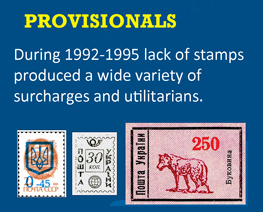
Ukraine did not issue any stamps until March of 1992 and initially simply did not have enough to supply all the post offices. So provisional Ukrainian stamps needed to be produced (not unlike what happened in 1918-19 when czarist stamps were overprinted with the trident in locales all over Ukraine). My fellow collectors and I were very excited to learn about the provisionals since we would all have new trident-overprinted stamps to collect! It was basically a fresh collecting field for all of us. I was able to amass a fine accumulation of provisionals material, but eventually sold it to help pay for more Western Ukraine stamps.
Do you collect stamps of Ukraine after the restoration of Independence?
In addition to the provisional stamps previously mentioned, I did also collect (and still retain) all of independent Ukraine’s stamps from the first decade and a half (through 2007). After that I began to just purchase those stamps/souvenir sheets with topics of interest to me.
What can you say about the stamps of Ukraine during the current war?
I have been extremely impressed with the job that UkrPoshta has done to try and maintain communications throughout the nation, delivering not only the mails but critical packages and parcels – thus helping to keep the country supplied and united. Their stamps and postal products recognize the bravery of the military as well as various support personnel – utility repair workers, rail workers, medical staffs – in addition to the everyday folks who have pitched in to defend their hometowns in “Hero Cities” around the country. Some of the clever stamps poking fun at the enemy help to boost morale. One of my favorite humorous stamps is the one honoring volunteers from 2024. That improbably overloaded truck hurtling down the road makes me smile every time I see it, but the stamp effectively gets its message across: Do what it takes to help out!
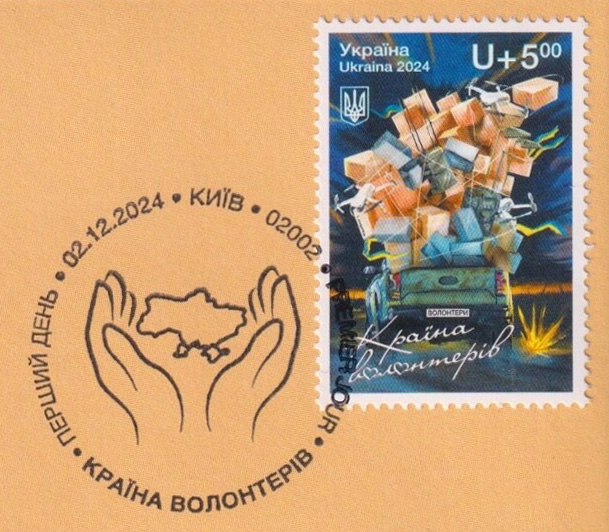
Figure 7. Ukraine’s Volunteers stamp from 2024.
In 1992, you initiated an annual Heorhiy Narbut Prize for the best design of a Ukrainian brand. What is the background to this idea?
Ukraine’s stamps from the first years of independence still retained a great deal of Soviet-style design and layouts. There was nothing wrong with the stamps – they commemorated worthwhile subjects – but they were somewhat bland (not very exciting or enticing). So I thought I’d set up a competition to try and spur design innovation. The exact aim of the award was set out in the announcement article: “The Narbut Prize will go to the artist(s) selected as having designed the outstanding stamp or stamp set the previous year. This prize will be awarded in conjunction with the Ukrainian Philatelic and Numismatic Society (UPNS). The publicity generated by the Narbut Prize should: help popularize Ukrainian philately, bring prestige and recognition to the UPNS,...[and] create and sustain a high artistic standard for Ukrainian stamp designs.”
Balloting first took place in 1993, when society members (and anyone else who wished to participate) voted on what they considered the best-designed stamps of the previous year. Originally, the Prize – a certificate along with a plaque or medal – only included a $100 honorarium. However, the amount soon grew to $250.
I was delighted to learn that after just a few years the Narbut Prize began to be considered the premier award for Ukraine's philatelic designers. Even though the Ukrainian stamp production firm, Marka Ukrainy (MU), also conducted an annual competition for the best stamp design, it did not have the same cachet as the Narbut Prize. Many folks did not trust the MU results. (I learned that in some instances employees at MU were told how to vote.) In contrast, the vote counting for the Narbut Prize was always conducted by an independent and trusted UPNS officer.
Even more important to Ukraine's designers, however, was the prize money. MU's artists were paid a meager wage. The Narbut Prize honorarium proved a substantial financial boost to the winners.
Ukraine’s official journal, Filateliia Ukrainy, also took note of the Narbut Prize. Beginning in 2001 and continuing through 2008 (when publication ceased), the periodical ran annual translations of the press releases I sent out announcing the Prize winners and runners up. In 2002, on the 10th anniversary of Ukraine's reemergence as a stamp producing country, the journal front cover depicted all of the Narbut Prize winners of the previous decade.
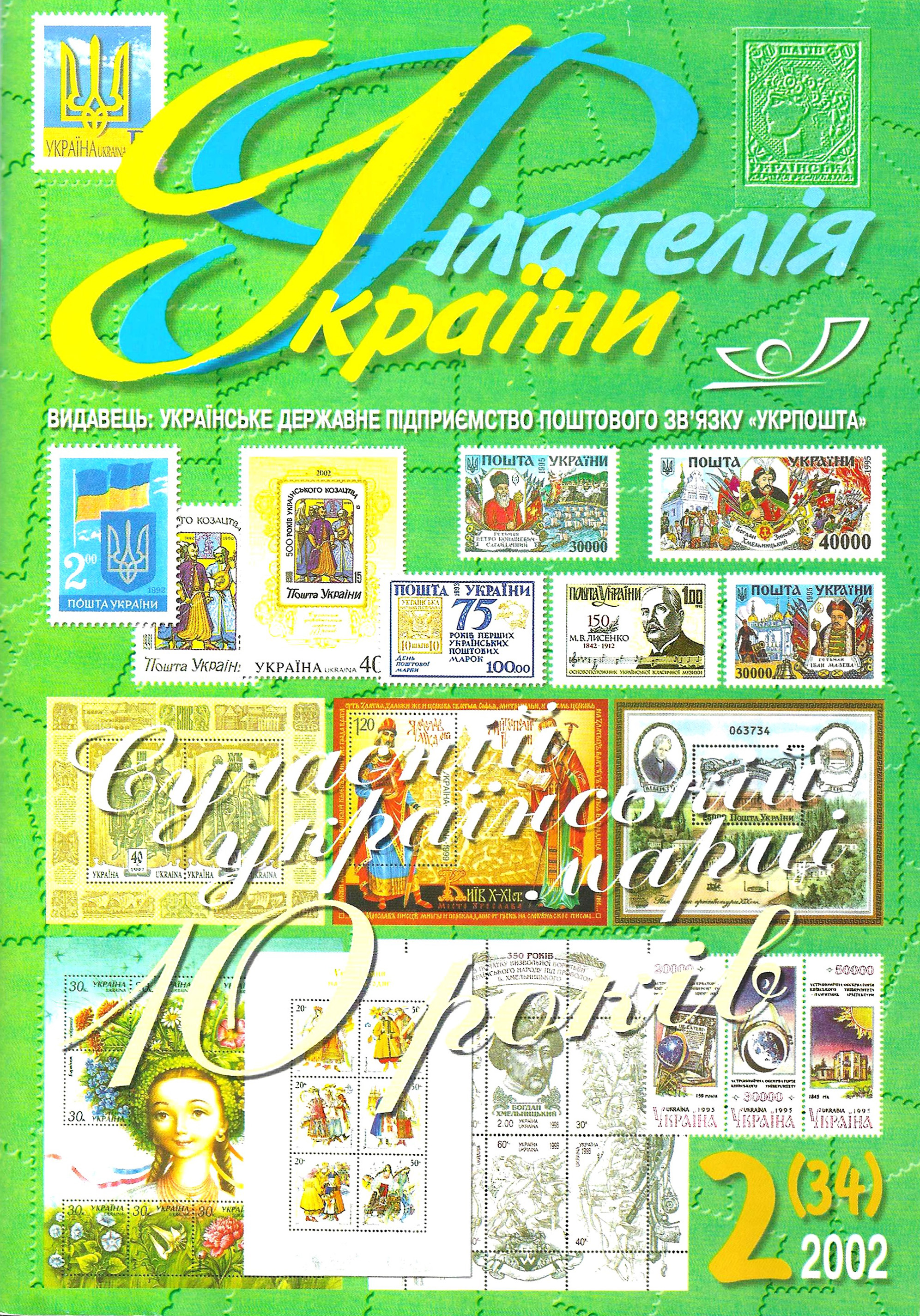
Figure 8. The front cover of issue 34 of Filatelia Ukrainy from 2002 showing the Narbut Prize-winning stamps/souvenir sheets from the first decade of the award’s existence.
In 2001, I set up a special edition of the Narbut Prize to determine “the best stamp issue of Ukraine’s first decade of independence.” Co-winners, declared the following year, were: “The Founding of Kyiv” (Europa souvenir sheet of 1997) and “Wildflowers of Ukraine” (souvenir sheet of 2000). These top two vote getters easily outdistanced all the others and finished within two votes of each other. I did not want to declare one better than the other and so decided to give them both an award. In 2002, then, the Narbut Prize was awarded twice: once for this special first-decade edition and then again later for the best design of 2001.
So it was not the UPNS but you, the vice-president, who was the monetary sponsor of the Narbut Prize? Why did you stop presenting the prize?
I should mention that I am not presently the vice-president. In the 40+ years I have been a UPNS member, I have served the society in many capacities: as editor of the Ukrainian Philatelist journal for 11 years (1985-96), as vice president (1987-91, 2008-16), and as president (2000-2007). For the past decade, however, I have not been an officer. I devote my spare time to research (mostly philatelic) and writing.
During the mid-2000s, I began to wonder whether or not to continue sponsoring the Narbut Prize. Ukrainian stamp designs had vastly improved since the early 1990s and there no longer seemed to be a need for an award to help stimulate or improve artistic design. The demise of Marka Ukrainy and the other unsettling events that transpired in Ukraine in late 2008 and early 2009 helped convince me that it was time draw the curtain on the Prize after a 16-year run.
Other factors also were taken into consideration. The financial crisis of those years impacted me as it did everyone else, and costs in both time and money had to be taken into account. (The Narbut Prize involved more than just the $250 prize money, since delivery and presentation costs upped the annual outlay substantially.)
Nonetheless, I am convinced that the Narbut Prize did its part to help popularize Ukrainian philately and improve the overall level of Ukrainian philatelic design.
How active is the UPNS today?
The society is quite active, publishing two periodicals: the bi-annual, English-language Ukrainian Philatelist journal (featuring major research articles) and the quarterly Trident Visnyk newsletter (online only with info on all of Ukraine’s philatelic and numismatic releases and with less-formal, short reports). It also holds two major get-togethers annually: a UKRAINEPEX convention-exhibit held in a different city every year, and a Zustich, traditionally held at a US east-coast locale where members converge to swap, sell, or trade all sorts of collectibles. In addition, the society issues First Day Covers commemorating notable events and figures in Ukrainian history, and it maintains a website (www.upns.org) and Facebook group to keep members informed and engaged.
Does the UPNS maintain relations with philatelists in Ukraine and with Ukrposhta, which is the main issuer of postage stamps in Ukraine?
The UPNS primarily includes members from the US and Canada, but additionally there are many others from around the world – including Europe, Asia, Australia, and five members in Ukraine. The Director General of Ukrposhta is an honorary member, and three UPNS members have also joined the Kyiv Society of Philatelists. UPNS will participate in this year’s eight-day international stamp exhibition, Boston 2026, showcasing several Ukrainian philatelic and literature exhibits. Members look forward to meeting representatives of Ukrposhta, which will also host a booth at the show. The society has reached out to Ukrposhta to plan a joint collaboration for the event. Both our booths will be located in the European Pavilion.
In 2024, you released the publication Western Ukraine 1918-1919: A Specialized Philatelic Catalog, dedicated to issues of Western Ukraine during 1918-19. How interesting was this book for American philatelists?
The book was very positively reviewed in the philatelic press and I ended up receiving orders not only from US collectors but also from Canadians and from various European collectors. I submitted the catalog to two philatelic literature competitions in 2025. At the American Philatelic Society’s (APS) Great American Stamp Show (Chicago), the largest annual North American philatelic exhibition, it received a Large Gold Medal as well as the APS’s special Research Medal. I was subsequently invited to submit the catalog to the biennially held New Zealand National Philatelic Literature Exhibition (Christchurch); there the catalog garnered a Large Gold Award with Felicitations. Needless to say, I was pleased since these were the top awards and they recognized all the hard work that went into compiling the catalog.
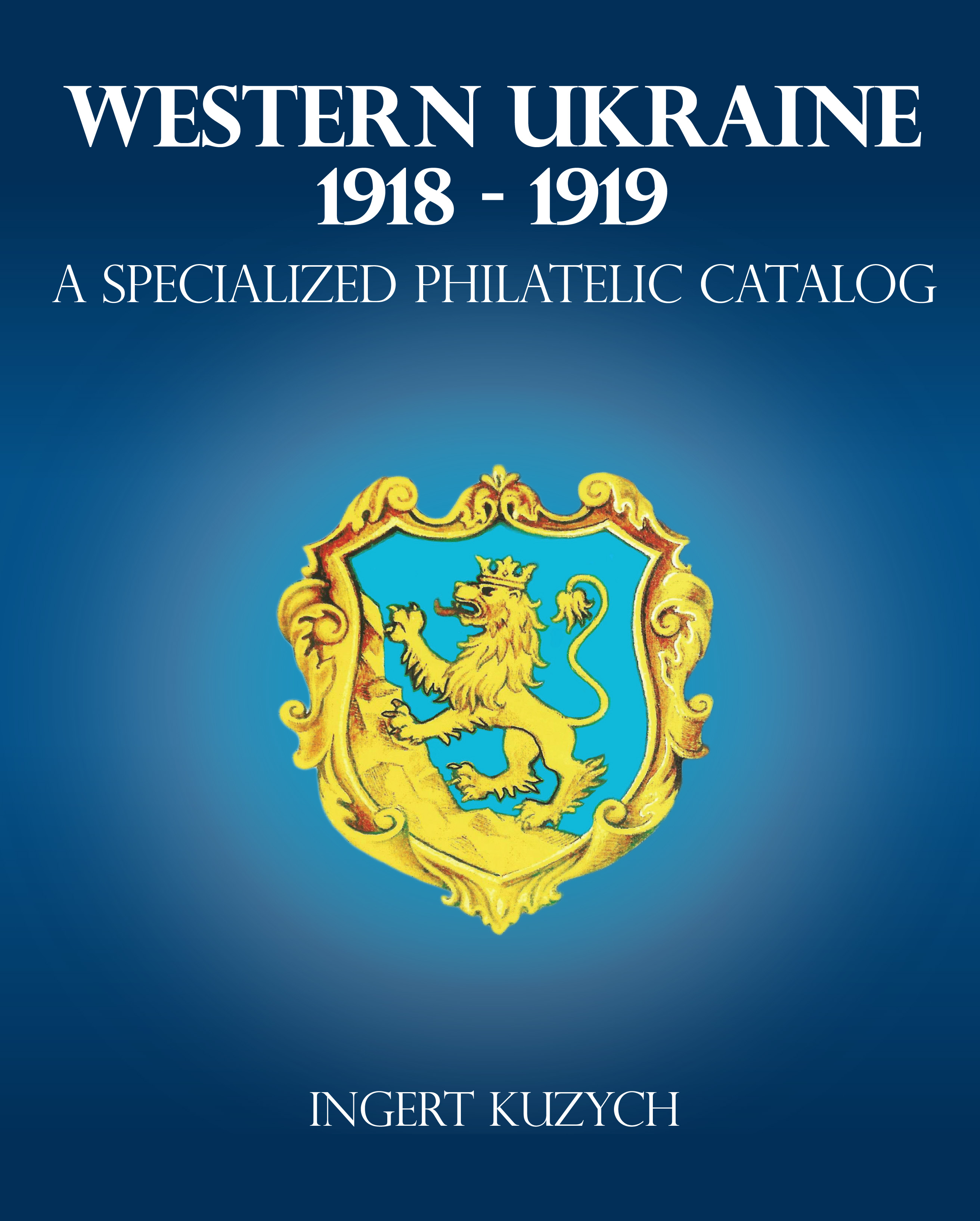
Figure 9. Western Ukraine 1918-1919: A Specialized Philatelic Catalog has been widely acclaimed in the philatelic community.
I should mention that the Specialized Catalog is really a prequel of a much larger and more detailed publication yet to come – The Postal History of Western Ukraine, 1918-1919 – written in conjunction with co-author Dr. Ihor Kulczycky and that is still being typeset.
Did Ukrainians order this catalog?
I did send copies of the catalog to a couple of contacts in Ukraine asking them to try and generate some publicity, but I did not receive any orders. I really was not surprised considering what folks in Ukraine have to deal with at present.
In the official press release for the issue, you call the stamps from the time of the ZUNR “The Crown Jewels of Ukrainian Philately.” Why? What is the uniqueness and value of these stamps?
Many Western Ukraine stamps are among Ukraine’s rarest and priciest. This situation came about because so many of those stamps were prepared in low quantities, or were quickly sold off or used up, and today few still remain.
After Lviv fell to the Poles on 22 November 1918, the capital of the country was briefly transferred to Ternopil before being set up provisionally in Stanyslaviv (Ivano-Frankivsk). It was there that, beginning in March of 1919, large quantities of Austrian (and some Bosnian) stamps were overprinted into Ukrainian stamps. However, Viennese stamp dealers soon learned of these new stamps and quickly and repeatedly sent agents to Stanyslaviv to purchase what could be had for their customers. (ZUNR postal representatives did restrict daily stamp sales but could not cease selling them to the agents because the ZUNR Government needed the hard currency that they brought with them!) The result was that not that many ZUNR stamps remained for use on mails. Certain stamp values are known to have been issued, and limited mint quantities are recorded, but no used examples of those stamps actually survive.
In Ukraine, especially on the eve of Easter, scans of Plastova Poshta stamps with Easter eggs, which were issued in Canada in 1959, are often shared on social networks. Few people in Ukraine know that it was you who introduced these stamps to the public in a “Focus on Philately” article that appeared in The Ukrainian Weekly. Have you researched the stamps of “Plastova Poshta”? Can they be of interest to philatelists?
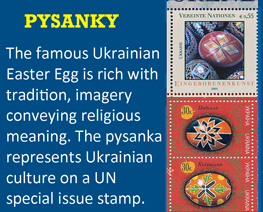
I have to admit that I do not collect Plastova Poshta. That said, I do own and cherish two of those splendid pysanky stamp sheets. (You will not be astonished to learn that I also collect pysanky on stamps!)
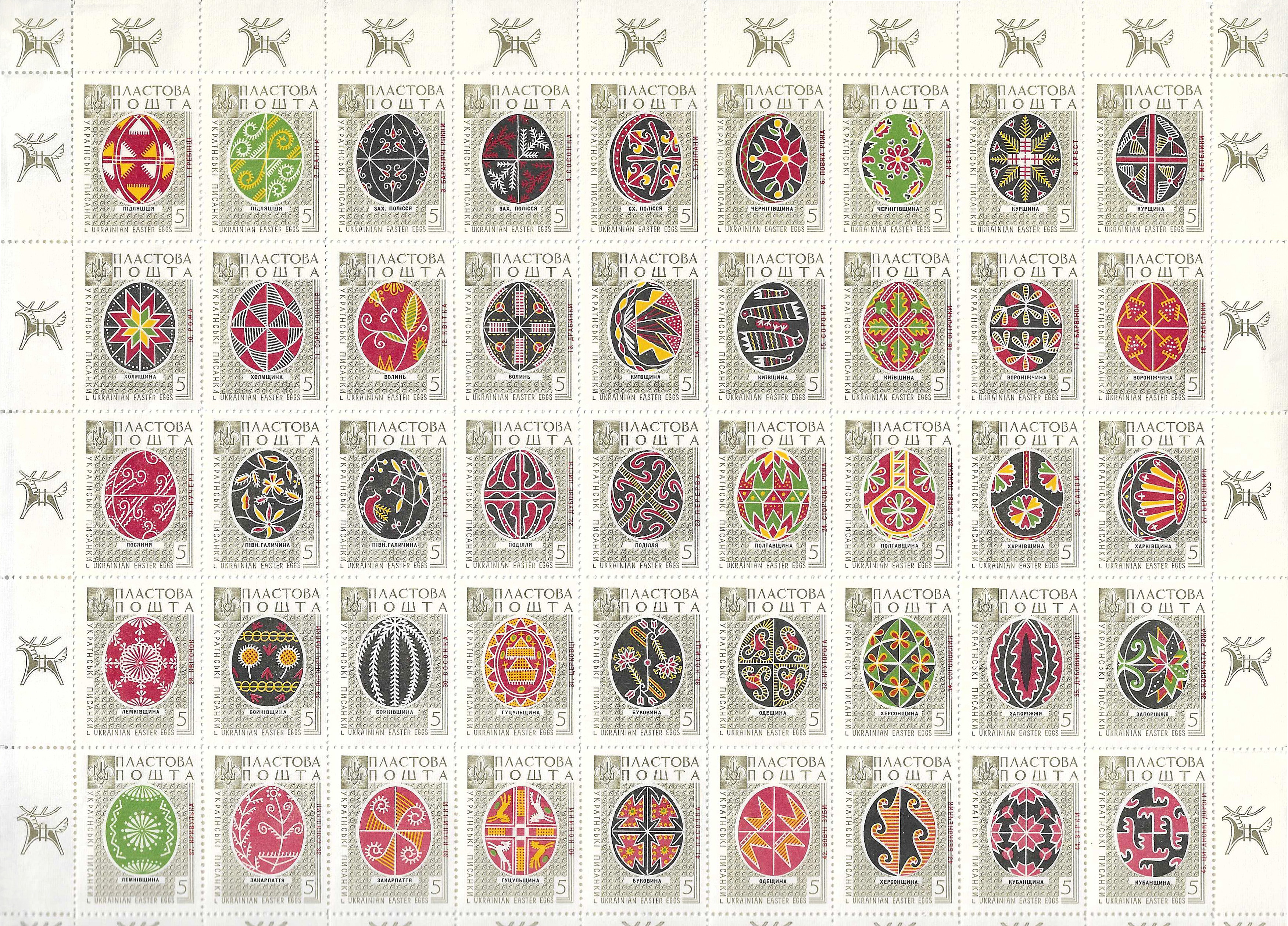
Figure 10. The Plastova Poshta stamp sheet features pysanky from many regions of Ukraine.
Over the past several years I have been pleasantly surprised at what seems to be growing interest in diaspora-related stamps (including not only Plastova Poshta, but also government-in-exile issues, Taborova Poshta, Pidpilna Poshta, and Ukrainian Bandurist Chorus stamps). So, yes, such non-official “stamps” are of interest to certain philatelists.
What Ukrainian stamps from the past would you recommend Ukrainian philatelists have in their collections?
I hesitate to recommend any collecting area specifically. People should collect what interests or pleases them. I have already mentioned some of the many possible Ukrainian collecting areas.
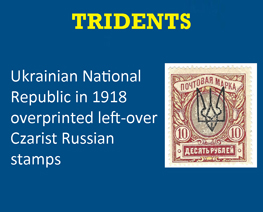
Some beginners might find it fun to collect samples of trident-overprinted stamps from different eras: the classic period 1918-20 (with dozens of different tridents created in various cities); Western Ukraine, where only one stamp release of 19 values (the Third Stanyslaviv Issue of 1919) featured a distinctive trident; and the modern provisionals period (1992-95) where numerous distinctive tridents were again created. Many of the above-mentioned issues feature interesting stamps that are not that expensive. See examples below.
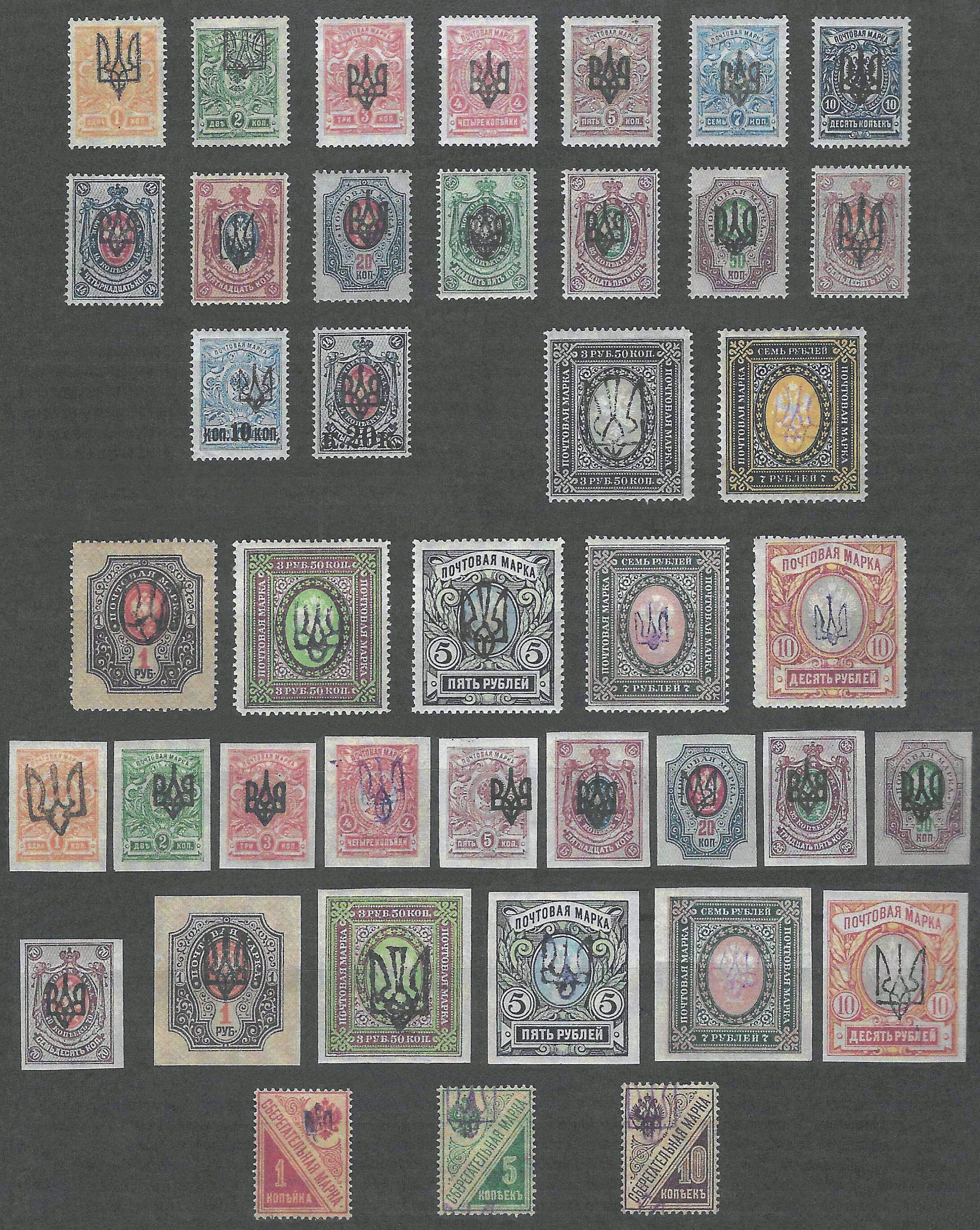
Figure 11. This sampling of trident-overprinted stamps from 1918-19 vividly shows the wide variety of tridents created and values overprinted.
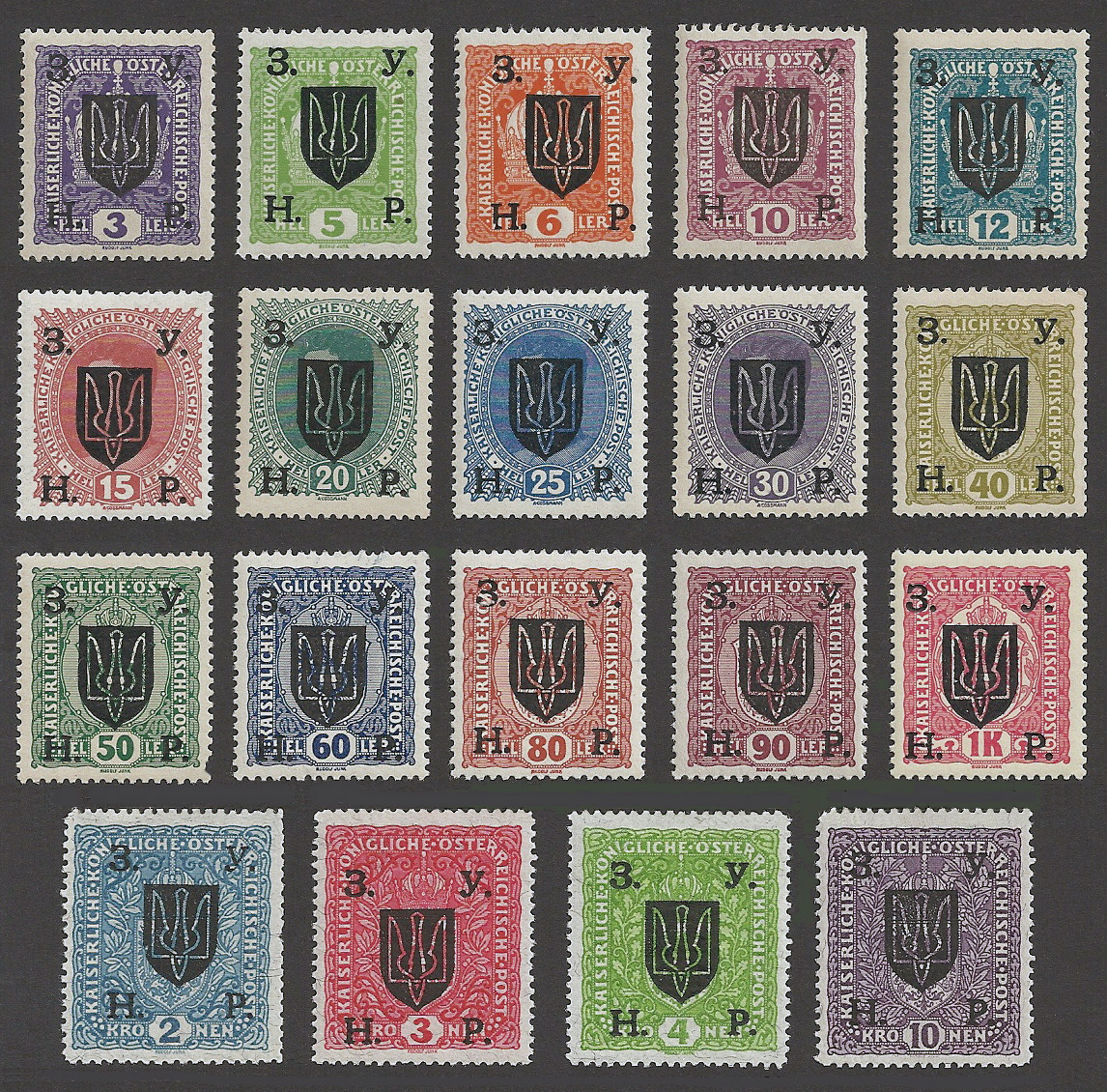
Figure 12. Western Ukraine’s Third Stanyslaviv Issue of 1919 depicts the trident as a negative impression inside a shield.
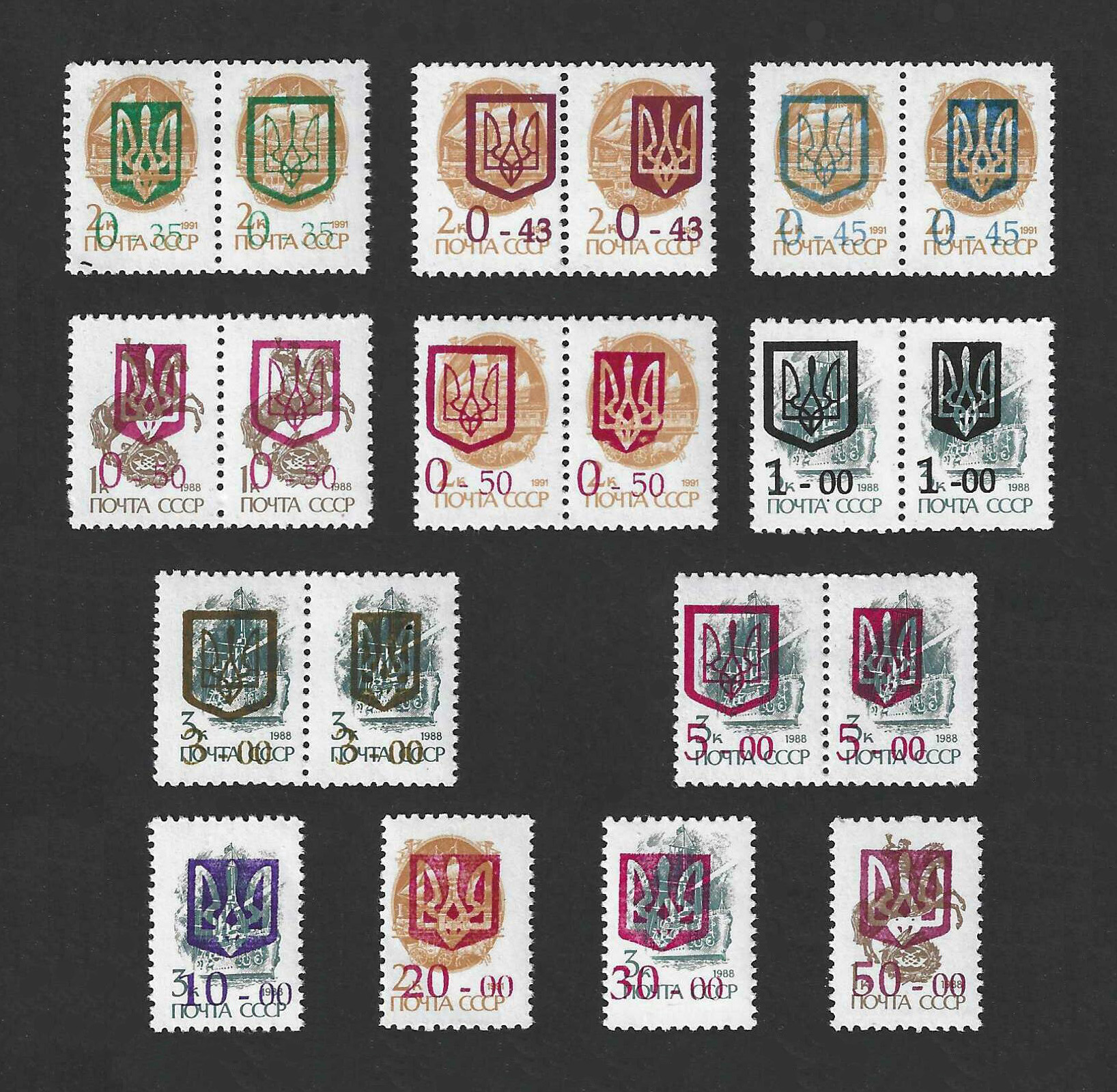
Figure 13. Ukraine’s 1992 Kyiv provisionals displayed tridents-in-shields as both positive and negative impressions and in different colors.
Is it worth investing in postage stamps today?
Philately should be thought of as a hobby, not as an investment field. Philately is a terrific medium for learning. The vast majority of the world’s stamps are/were created in large quantities and therefore will never really appreciate in value. It is rarity that makes particular stamps valuable.
All of the most valuable stamps – worldwide or Ukraine specifically – only exist in very limited quantities. The infamous “Defying the Russian Warship” stamp of 12 April 2022 had a printing of 500,000, which normally would not make it very valuable. But the worldwide demand was so great that it will undoubtedly retain some enhanced value over time – but nothing like classic Ukrainian or Western Ukrainian stamps from 1918 or 1919 where, in some exceptional instances, perhaps only 20 or less are in existence. Two of Ukraine’s absolute most valuable stamps are described below.
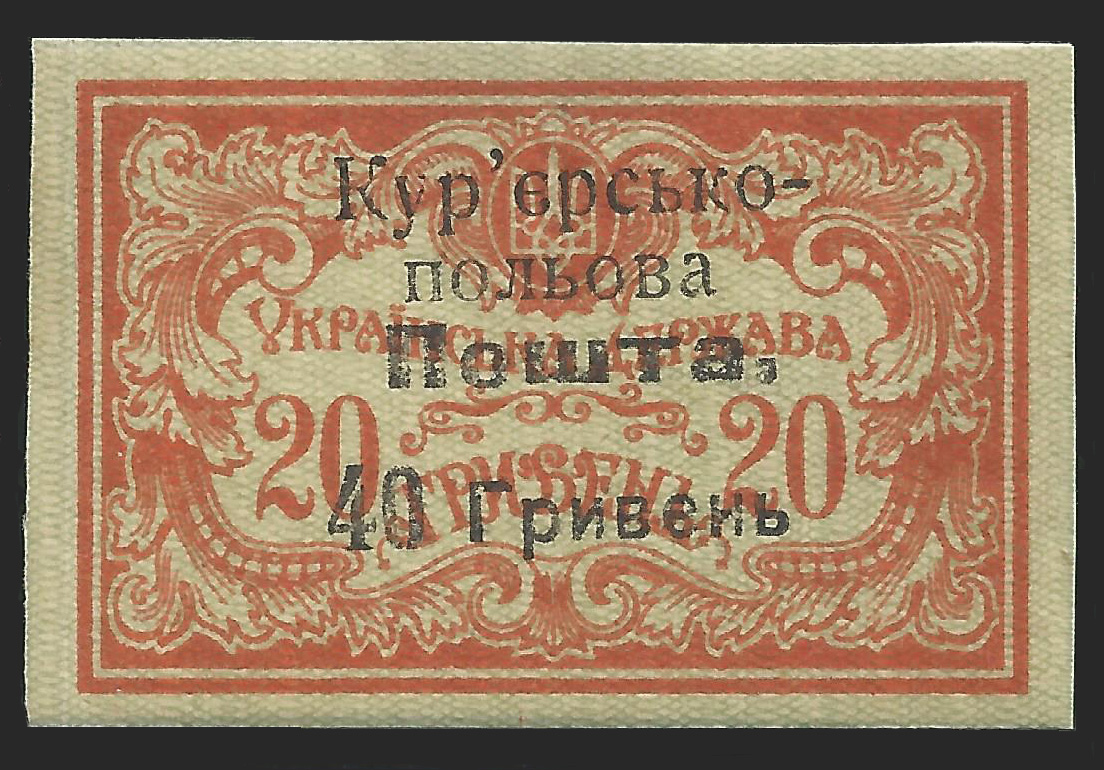
Figure 14. Ukraine’s rarest and most valuable stamps. The orange 20-hryven stamp released in 1919 was revalued to 40-hryven the following year as part of a Courier Field Post stamp set. Only five of this particular value were prepared and just two are known to have survived: this mint example and one recorded used on a cover.
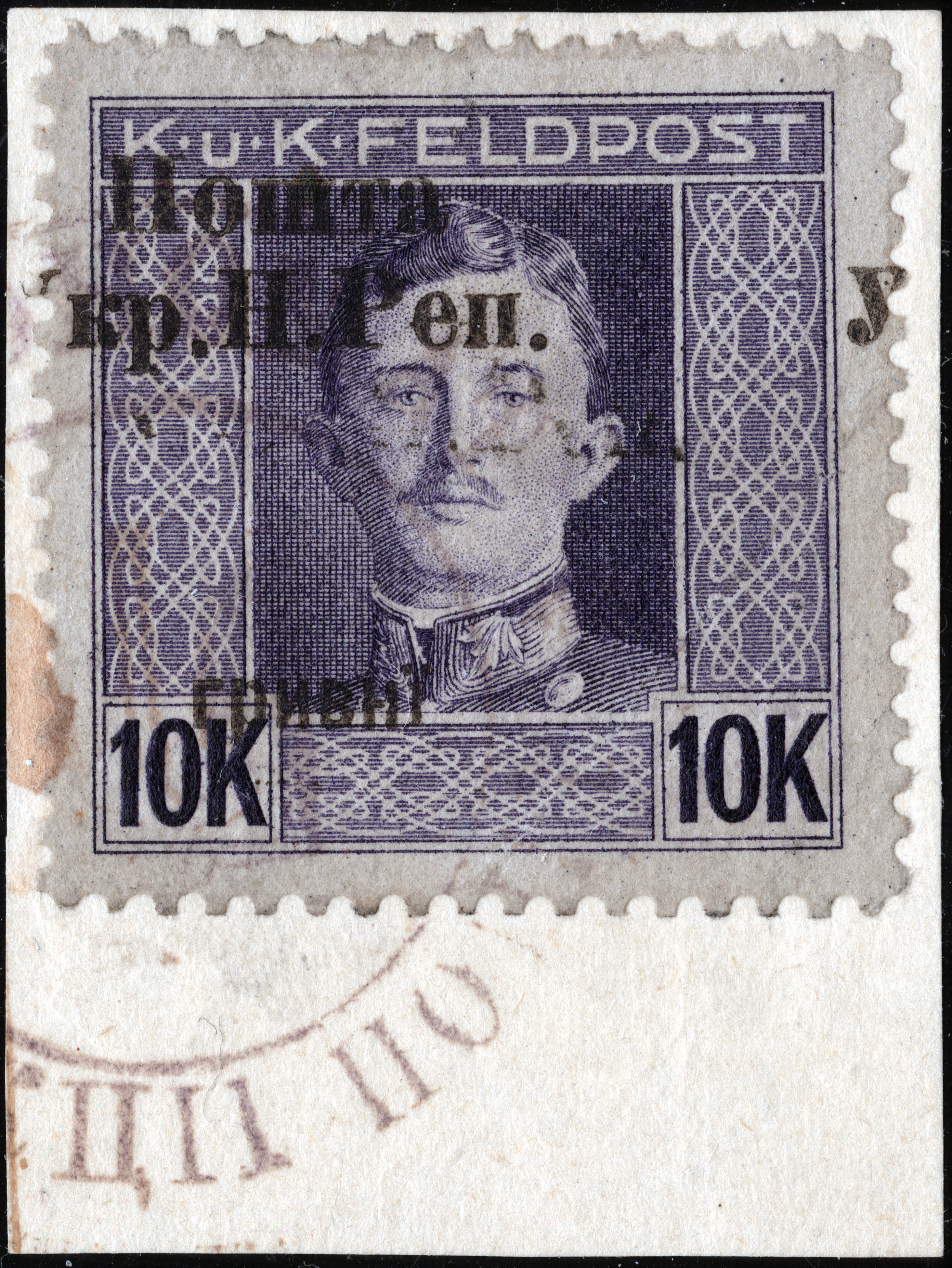
Figure 15. Only two of Western Ukraine’s rarest stamp were ever created – as part of the Second Stanyslaviv Issue, Third Set that saw remnant Austrian field post stamps overprinted into Ukrainian values. Both survive: a mint example and this 10-hryvni specimen that was attached to a document and subsequently cut off.
Is there a future for philately as an industry? At the end of last year, Denmark ended its government stamp program, citing a lack of demand for paper letters. Will this set a precedent?
It may well set a precedent. I can see many more countries over time (the next 10 to 20 years?) doing away with stamps. If so, then the time period from 1840 (when Great Britain issued the world’s first stamps) to circa 2040 may become the “Era of Stamps” when people used quaint little adhesives to send messages via paper instead of by electrons.
It could be, however, that certain nations with a proud postal/philatelic history will try to prolong stamp issuance (e.g., various larger European countries and the US). On the other hand, once governments have given up on stamps, intrepid entrepreneurs may decide to create private stamp issues to perform some other (non-postal) function – potentially creating an entirely new collecting arena. It is very difficult to fathom the possibilities.
I believe philately will survive, but it may be in somewhat of an altered form. If stamp production ceases, then it will be possible to form complete collections of countries (or topics) – something collectors dream of but rarely attain unless they collect countries/colonies that no longer exist. Nonetheless, this would be a severe challenge. Since 1840, at least 500,000 (possibly closer to a million) distinct stamps have been produced worldwide. Both Britain and the US (which began stamp issuance in 1847) have each released well over 5,000 different stamps.
How popular is philately in America?
So far, philately continues to hold its own but it is widely seen as a hobby for retirees. The American Philatelic Society (the world’s largest philatelic has recognized this situation and has created the Young Philatelic Leaders Fellowship (YPLF) to cultivate the next generation of philatelic leaders and activists. YPLF provides collectors aged 16 to 24 with the opportunity to learn from experts in the hobby and gain experience in their chosen track, fostering a lifelong connection with philately.
Over the course of a year, fellows build relationships with top collectors, exhibitors, writers, dealers, and researchers through immersive, in-person experiences. They also complete a year-long project in one of six tracks: Author, Curator, Dealer, Analyst, Designer, or Exhibitor.
Could new formats of collecting emerge that will be more popular among young people?
Anything is possible, but over the past few decades I have noticed that the “collecting bug,” so prevalent when I was growing up, just doesn’t seem to be as widespread among young people as it used to be. This applies to ALL forms of collecting. When I married, my wife wanted – and we collected – a specific set of china for everyday use and another for formal occasions. She also cherishes various china sets that she inherited from aunts or grandparents and, on her own, has collected an impressive set of tea cups/saucers. Now, however, she is having difficulty finding anyone among her extended family who is interested in her holdings.
What would you wish for Ukrainian philatelists, philately functionaries, and Ukrainian stamp artists?
In a word: Peace. Peace to have time to sit back, to relax, and to enjoy and promote hobbies like philately. For Ukraine’s stamp artists, I would say, “Keep up the good work! Your efforts are helping bring your country’s plight to the world.”